
McKinley Arrest Log Coverage
McKinley County posts no 72-hour or seven-day booking blotter. The MCADC has no public multi-day list. The sheriff's office publishes none either. Gallup Police handles records requests, but its site offers no daily arrest bulletin or feed archive. So no window, field set, or photo practice can be stated for an online log. Why does this matter? A custody feed tracks a jail. A newspaper blotter picks events to cover. An agency report answers a request about one incident or span. The three overlap, yet none substitutes for another. Start a county record search with the MCSO Records Division, and name MCADC when a booking sheet is the goal.
Read McKinley Arrest Reports
A multi-day search works backward from three things: a date, an agency, and an event. Newspapers publish late. A booking time can also differ from the incident time. Record both when you can, and keep the source label attached to every fact.
- Choose a date range that covers the event, plus nearby days for delayed reports.
- Check MCSO or GPD as the arresting agency and MCADC as the likely local booking custodian.
- Read local news by publication date, then identify which agency supplied the account.
- Request the booking sheet or incident report with the person's name, date, agency, and booking number if known.
- Use the proper New Mexico court system to find the later disposition.
This goes beyond the McKinley County 24 Hour Arrests page. That route focuses on immediate custody confirmation. A multi-day log instead tests whether a news story, an agency record, and a court filing all point to the same McKinley County arrest.
McKinley Arrest-Log Entry Fields
No official result screen supplies a set log schema. A requested record may still hold these items. Each field depends on what the county maintains and can release. Treat the inventory as a possible roster of details, not a guarantee of what appears online.
| Record item | How to interpret it |
|---|---|
| Name and identifier | Identity as entered and a booking or agency number, if available. |
| Incident and intake dates | Separate times that explain why a report can fall outside a narrow search window. |
| Arresting or booking agency | MCSO, GPD, or another authority tied to the event or intake. |
| Charges as booked | Initial charges subject to amendment, dismissal, plea, trial, or acquittal. |
| Bond or release detail | A point-in-time status that may change after the entry was made. |
| Photo or attachment | Material that may exist but remains subject to disclosure review. |
A newspaper story may drop most of these fields. It leans on police narrative, operations, and agency quotes. A booking sheet, flipped around, may say little beyond the basics of custody. Pull the incident from the arresting agency's report and the outcome from the court file.
Gallup Weekly Police Activity
The Gallup Sun public-safety section is the closest thing Gallup has to a blotter. Its "Weekly Police Activity" items repeat on a steady cadence. Separate DWI reports cover Gallup Police, MCSO, and task-force cases. That rhythm gives readers context across days. It is not a full MCADC booking export. Remember what a publication date is. It is not an arrest date, so never relabel one. Article photos are editorial or agency-supplied, not a county mugshot gallery. Keep names and charges tied to the story. Then confirm them with the agency and the court. The Gallup Today local-news page offers another editorial stream covering public-safety events.
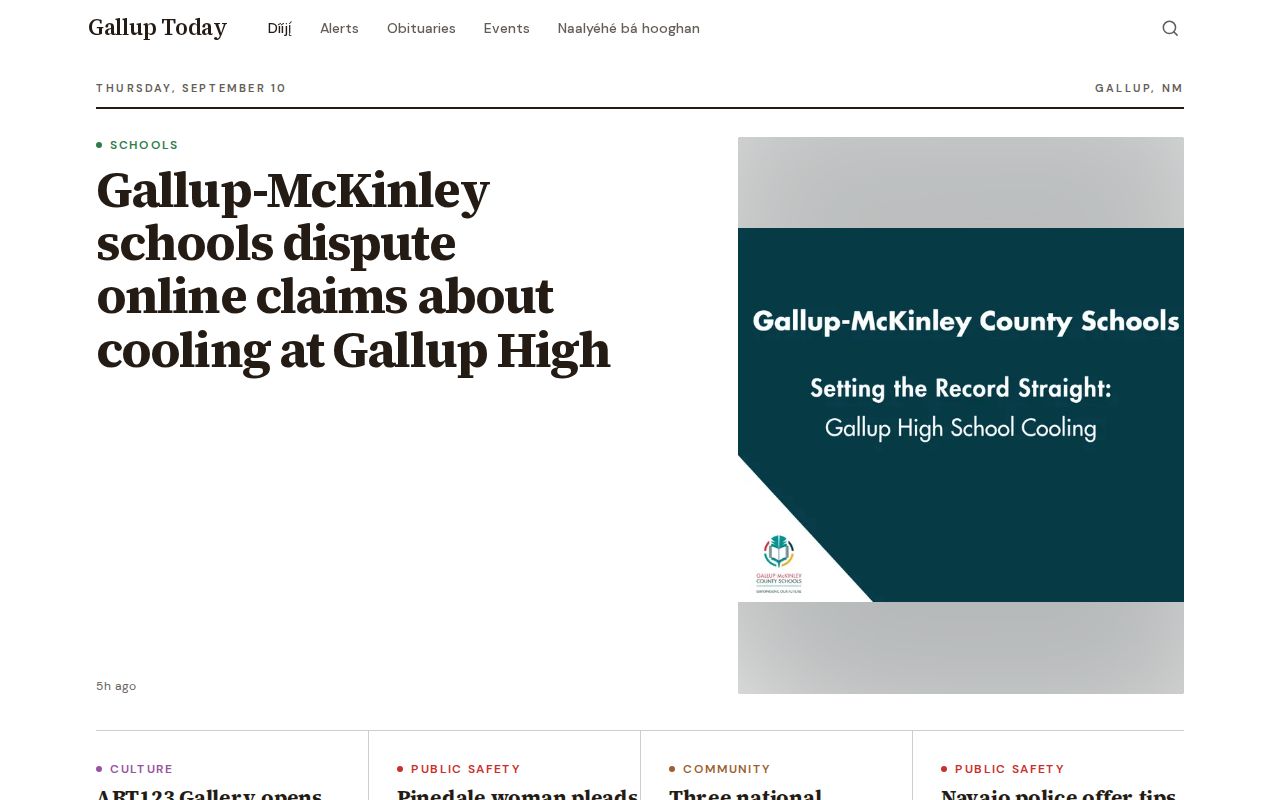
Coverage here is news-driven and sporadic. Its visible stories cannot stand in for a complete McKinley County arrest log.
McKinley Enforcement Operation Reports
Gallup Today shows exactly why enforcement news is not a booking list. One weekend joint traffic operation brought more than 50 stops. Arrests there tied to bench warrants, a revoked license, and DWI work. The story conveys scale. It names no roster. Not every stop ended in a jail booking. The joint traffic-operation report keeps the story's own attribution and context.
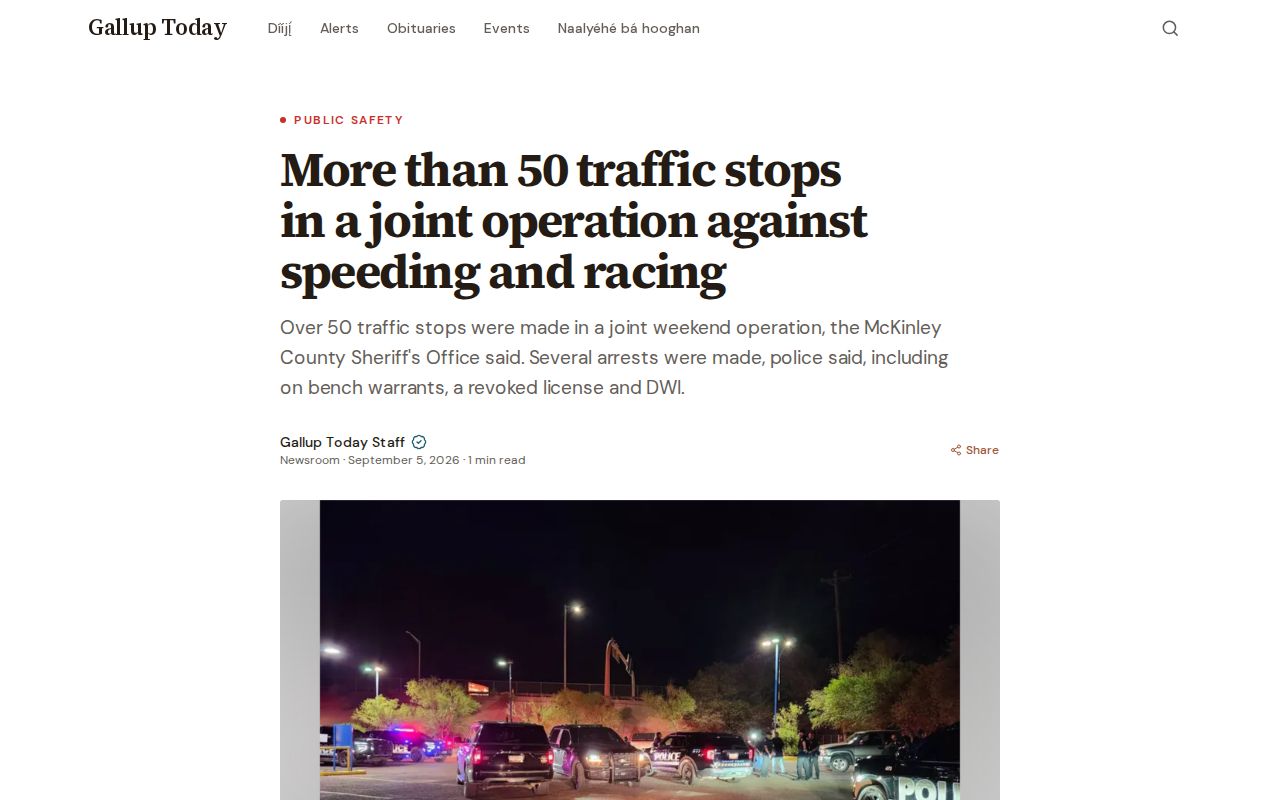
That page is a news article about an operation. It is not a list of MCADC bookings. Custody status is absent too. Regional outlets and the Navajo Times also run event-based reports touching McKinley County and nearby tribal communities. Treat those as leads, and rely on agency and court records as the control sources.
McKinley Arrest Trends Need Context
The FBI Crime Data Explorer offers aggregate law-enforcement data. It cannot name anyone booked at MCADC. Any trend claim needs a reporting period, a participating agency, and a unit of measure. Incident counts, arrest counts, and jail admissions differ. Without a local booking feed, the temptation grows to fill gaps with aggregates. Resist it. Charts cannot supply missing names or estimate today's jail population. Study broad patterns with FBI data, then turn to MCSO, GPD, MCADC, and the courts for a single record.
- Incident
- An event recorded by law enforcement, which may involve no arrest.
- Arrest
- A law-enforcement action that may or may not lead to MCADC booking.
- Booking
- The jail intake event recorded after an arrest or transfer.
- Disposition
- The later court resolution, distinct from the original charge.
Note: A chart's movement says nothing about who was arrested or who entered McKinley County custody.
McKinley Arrest Archives
With no public McKinley County log archive, older arrest work turns to retention rules. New Mexico's records-retention schedule 1.21.2 covers jail files with a five-year destruction clock. That clock starts when the file closes. Don't treat the entry as a blanket rule that every mugshot vanishes at five years. A booking photo may live in a different record series. A hold may freeze it. A local custodian must first sort out which category controls the file.
Earlier, repealed material set a different period and spelled out long lists of jail-file contents. That is history, not current law. Ask MCADC or MCSO first. Check whether the booking sheet, release entry, or photo is still in local hands. If a transfer happened, get the record-series or accession number and the destination. The State Records Center and Archives digital collection page lays out the official state archive setting. Use it for such requests.
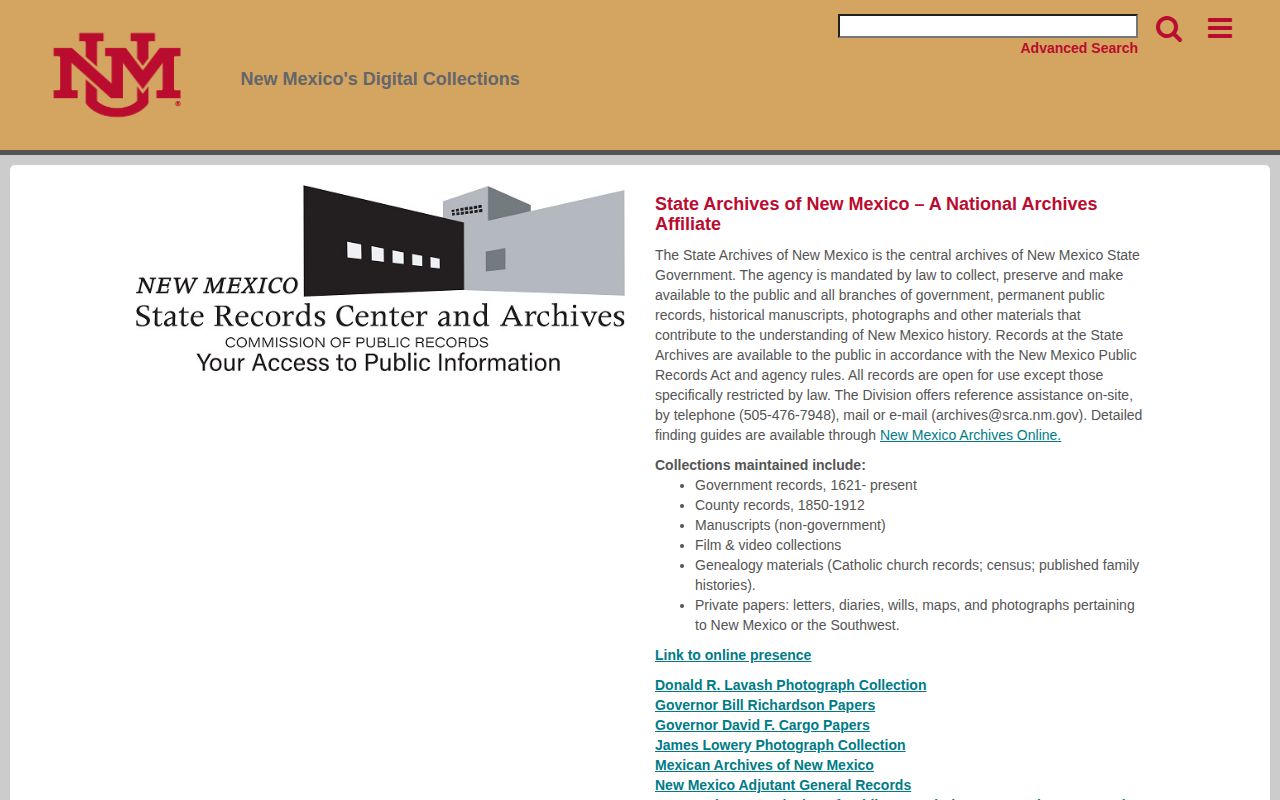
The collection lists no MCADC booking series. So the archive page works as a last resort, not a way to search a McKinley County arrest name.
Request Older McKinley Arrest Records
Begin with the arresting agency and a rough date. Ask what still exists: the booking file, sheet, photo, incident report, or release record. Name which retention series applies. A specific request like this cuts false matches and points staff to the right system.
- For MCSO records, use the Records Division phone, email, fax, or mail channel.
- For GPD reports, contact Gallup Police Records and use its city request form.
- For MCADC intake material, name the detention center and ask who is the current custodian.
- For transferred state records, obtain the series identifier before contacting SRCA.
- For the case outcome, search the correct New Mexico court rather than an old booking copy.
Access and retention are separate issues. A McKinley County record can exist yet stay confidential or restricted. Or it may once have been public but no longer be held. Expungement can close covered arrest material, including booking sheets and photographs. Authorized systems keep lawful access even then.
McKinley Charges Need Court Review
A McKinley County arrest log entry marks a single moment in a case. Charges can shift after booking. Prosecutors may amend the counts, drop them, or take a plea. Only the court record shows how the case ends.
Current custody needs its own check. Someone booked in McKinley County may have been released, transferred, or moved on. A sentence can place a person in New Mexico Corrections Department custody. A federal system can take someone too. No old log or booking photo tells you where that person sits today.